Which Airport Should You Fly Into for the Dolomites?
The Dolomites are not served by a single international airport. Depending on whether you are heading to the Eastern Dolomites (Cortina d’Ampezzo) or the Western Dolomites (Val Gardena, Alpe di Siusi), your landing point will change your entire transit day. If you are still deciding between the Dolomites and other Alpine regions, our Dolomites versus Alps comparison explains why the infrastructure and trail density here are unmatched.
Venice Marco Polo (VCE): This is the primary gateway for the Eastern Dolomites. If you are not renting a car, the Cortina Express and ATVO buses run directly from the airport to Cortina d’Ampezzo.
Treviso (TSF): While geographically closer to the mountains than Marco Polo, Treviso is a smaller hub primarily for budget airlines.
Innsbruck (INN): Located in Austria, this is the most convenient airport for the Northern and Western Dolomites. If you land here, you must ensure your rental car has an Austrian Vignette (toll sticker) and check with the rental agency that it allows border crossings into Italy.
Verona (VRN): Verona is an excellent choice for the Brenta Dolomites or the southern Val di Fassa. The drive to Ortisei is almost entirely on the A22 Autostrada, making it a fast entry route.
Bologna (BLQ): Often a sleeper option, worth comparing with Venice when you choose your flights.
The Milan Warning: Avoid the rookie mistake of flying into Milan (MXP or LIN) for a short trip: the drive is long. Unless the Dolomites are part of a larger Northern Italy road trip, the transit time is a major hurdle.
Should You Rent a Car in the Dolomites?
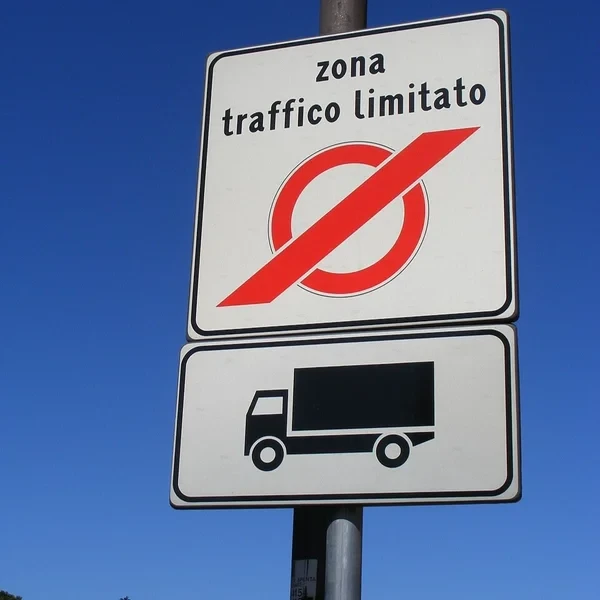
Renting a car offers the most freedom, but it comes with specific Italian headaches. The most critical is the ZTL (Zona a Traffico Limitato). These are restricted traffic zones in almost every village center. Entering a ZTL without authorisation carries a fine of 83 EUR$96 to 332 EUR$385 (Italian Highway Code, art. 7). If your hotel is in a pedestrian zone, as in Ortisei, ask it before you arrive how to register your plate.
The Autostrada System: The A22 (Brenner Pass) is the main artery. It is a toll road, with tolls calculated on the kilometres driven. You will pull a ticket upon entry and pay when you exit. Estimate your trip with the Autobrennero toll calculator. Some lanes are reserved for electronic toll collection (Telepass): avoid them unless your rental car has a tag.
Fueling Tip: Always refuel in the valley towns before you begin climbing the high mountain passes. Gas stations on the passes are rare, have limited hours, and are significantly more expensive than those near the main highways.
Winter Requirements: From November 15th to April 15th, winter equipment (snow chains or winter tires) can be required by the road operator; it applies as soon as there is snow or ice. If renting in Venice, Verona, or Bologna during the shoulder season, verify that the car has M+S (Mud and Snow) tires.
Can You Get Around the Dolomites Without a Car?
If you prefer not to drive, the public transport network in South Tyrol (Südtirol) is world class. It is coordinated through suedtirolmobil.info.
The Train Backbone: The main rail line runs through the Valle Isarco (Eisacktal), stopping at Bolzano (Bozen) and Bressanone (Brixen). From these stations, high frequency SAD buses depart for the mountain valleys.
The Guest Pass Advantage: Many accommodations in South Tyrol offer their guests the Südtirol Guest Pass, valid on all public transport in the südtirolmobil network. It does not cover long-distance trains (EuroCity, Railjet, Frecciarossa, Frecciargento, Italo), the cross-border regional trains Brenner - Innsbruck and San Candido - Lienz, or some seasonal shuttles such as lines 444 (Dobbiaco - Misurina - Rifugio Auronzo), 439 (Monguelfo - Lago di Braies) and 442 (Dobbiaco - Villabassa - Lago di Braies, 1 July to 15 September 2026 only).
Closest Train Stations to the Dolomites
There is no single “Dolomites” train station. Pick the one that matches the valley you are heading to.
- Calalzo di Cadore: The terminus of the Venice - Cadore line and the closest station to Cortina d’Ampezzo. Cortina Express buses run on to Cortina.
- Bolzano (Bozen): The main rail hub of South Tyrol. It is the gateway to Val Gardena (SAD bus line 350 to Ortisei) and Alpe di Siusi.
- Fortezza (Franzensfeste): The junction where the Brenner line meets the Puster Valley line. You change here for trains heading east toward Dobbiaco and San Candido.
- Bressanone (Brixen): On the Brenner line. It is the closest mainline station to Plose and the northern entry to upper Val Gardena via SAD bus.
- Dobbiaco (Toblach): On the Puster Valley line, this station is also the starting point of the seasonal shuttles to Tre Cime di Lavaredo (line 444 to Rifugio Auronzo) and Lago di Braies (line 442), which the Guest Pass does not cover.
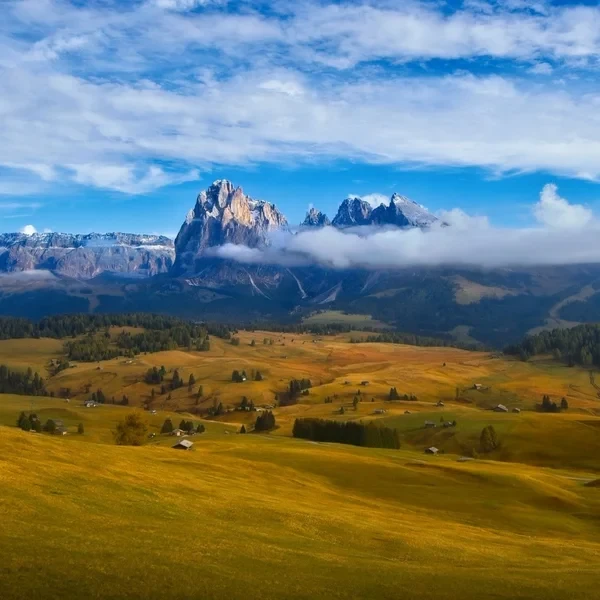
Alpe di Siusi
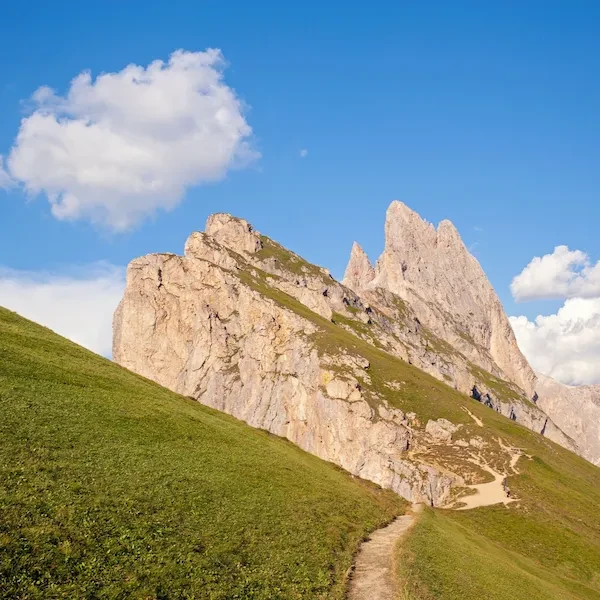
Experience the Alpe di Siusi (Seiser Alm), Europe's largest high-altitude alpine meadow. The Panorama Traverse offers a gentle yet spectacular circuit through emerald pastures, framed by the anvil-shaped Sciliar and the towering spires of the Sassolungo. Perfect for photographers and families alike.
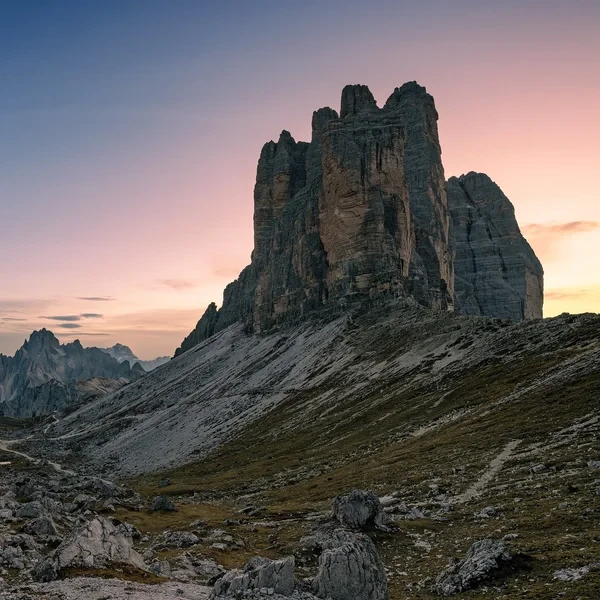
Tre Cime di Lavaredo Loop
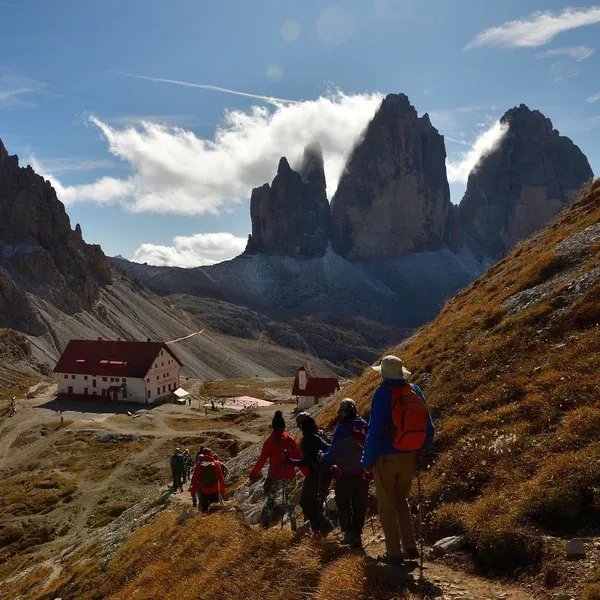
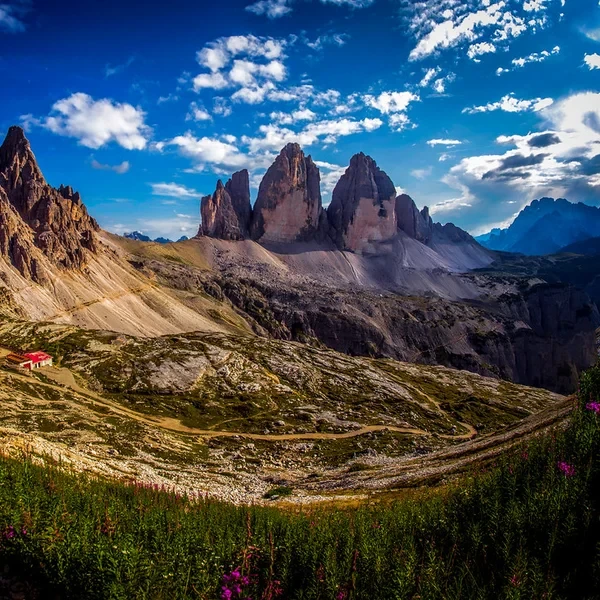
Circle the most iconic monoliths in the Alps. This essential day hike brings you face-to-face with the dramatic north faces of the Three Peaks, traversing high-altitude scree fields in the heart of the Sesto Dolomites.
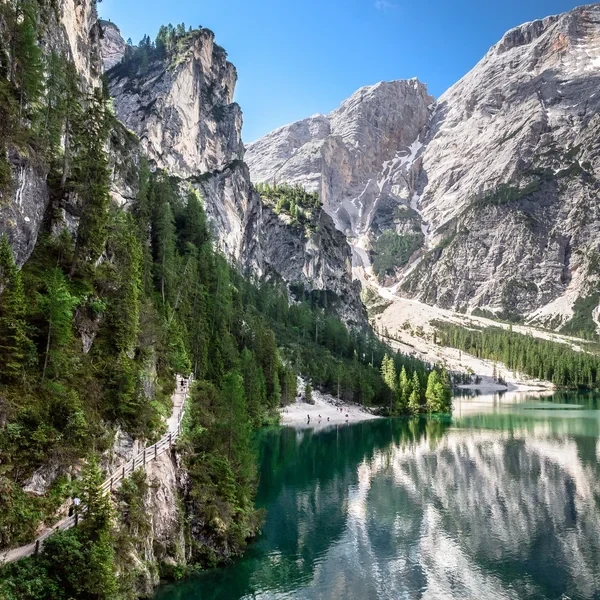
Lago di Braies
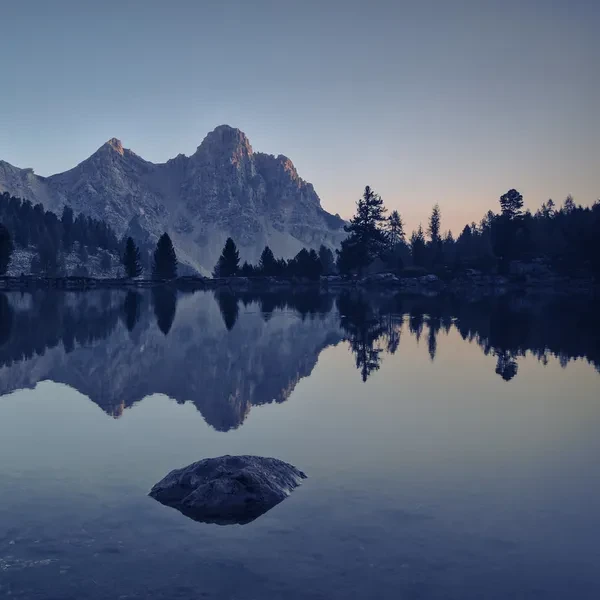
Visit the most famous lake in the Italian Dolomites. This guide covers the essential shoreline loop, the easy hike to Malga Foresta, and the 2027 parking and shuttle regulations.
How Long Does It Take to Drive the Mountain Passes?
Once you are in the heart of the Dolomites, distance is measured in time, not kilometers. A stretch of mountain road can take far longer than its length suggests, due to sharp turns and slow moving camper vans.
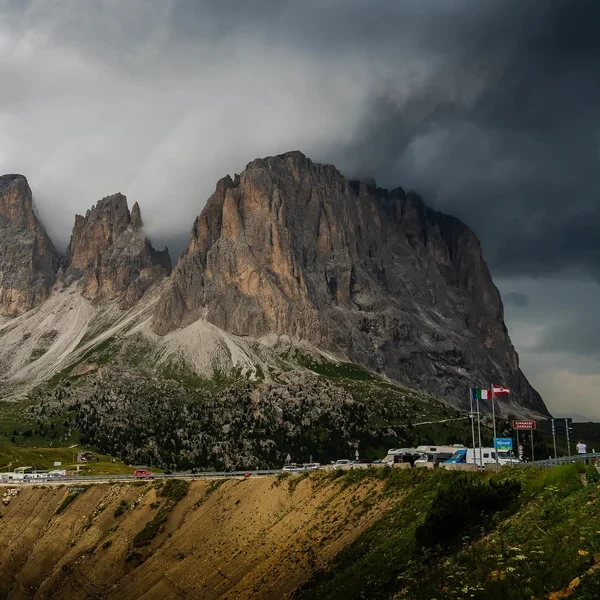
Passo Sella and Passo Gardena: These high altitude passes sit at approximately 2,218 m7,277 ft and 2,121 m6,959 ft. During July and August, these roads become extremely congested. Always check the local tourism board websites for Passo Aperto (Open Pass) status before heading out.
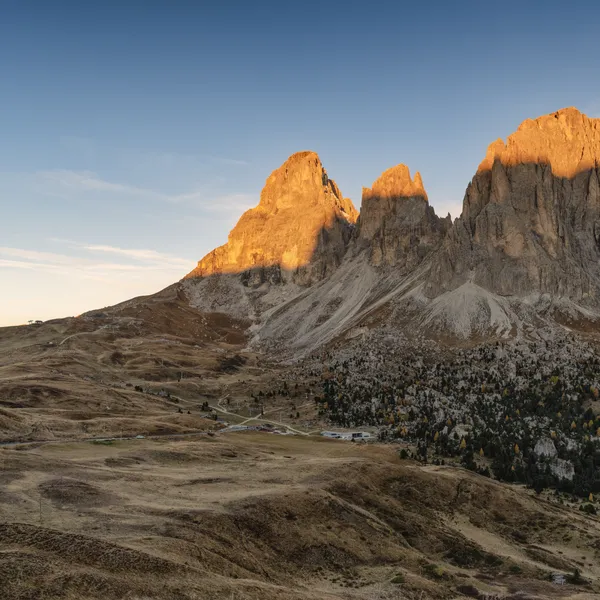
Passo Sella (Sellajoch)
Passo Sella links Val Gardena and Val di Fassa, at the foot of the Sassolungo. You can reach it by bus, on foot or by lift, and it is the start of the Sassolungo circuit and of the Forcella gondola.
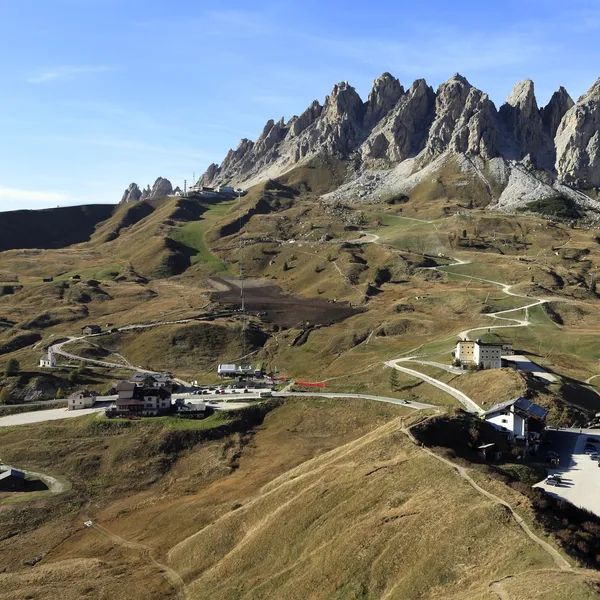
Passo Gardena (Grödner Joch)
Passo Gardena links Val Gardena and Val Badia, between the Sella and the Cirspitzen. You can reach it by bus in summer, on foot or by lift, and trail 2 leads from the pass to the Puez hut.
What Should You Prepare Before Arriving?
- International Driving Permit (IDP): If your license was issued outside the EU and the EEA and you have not been resident in Italy for more than a year, the Italian Highway Code (art. 135) requires, with your license, an international permit or an official Italian translation. Without these documents the fine runs from 408 EUR$473 to 1,634 EUR$1,895.
- Offline Maps: Mobile signal is non existent in the tunnels and deep valleys. Download offline maps for the entire Trentino Alto Adige region before leaving the airport. Our interactive hiking map shows every trailhead and rifugio to help you plan your route.
- Parking Fees: Several busy sites (Lago di Braies, Tre Cime, Alpe di Siusi) require an online booking. For Lago di Braies, the official Prags valley portal sells a combined parking and transit ticket at 44 EUR$51. If you drive there between 1 July and 15 September (2026 dates), between 09:00 and 16:00, without a reservation or a transit permit, you will be turned away at the valley entrance. Our access booking guide lists the prices and hours for every affected site.