Are the Dolomites Part of the Alps?
Yes - but the question is more complicated than it looks. Geographically, the Dolomites are a subrange of the Eastern Alps, sitting in northeastern Italy across five provinces: Belluno, Bolzano (South Tyrol), Pordenone, Trento and Udine. They share the same tectonic history, similar latitude, and many of the same alpine ecosystems as the broader range.
But when people ask whether the Dolomites are part of the Alps, they are usually noticing something real: the Dolomites look nothing like the Alps they have seen in photographs. The rounded, glacier-capped bulk of Mont Blanc. The Matterhorn’s angular silhouette. The wide glaciated valleys of Switzerland and Austria. The visual contrast between those landscapes and the pale vertical towers of the Dolomites is dramatic, and the reason for it is geological, not geographical.
What Made the Dolomite Rock?
Many Alpine massifs are made of granite and metamorphic rock, shaped by ancient glaciers into rounded peaks and U-shaped valleys. The Dolomites are made of dolomite and formed in an entirely different environment.
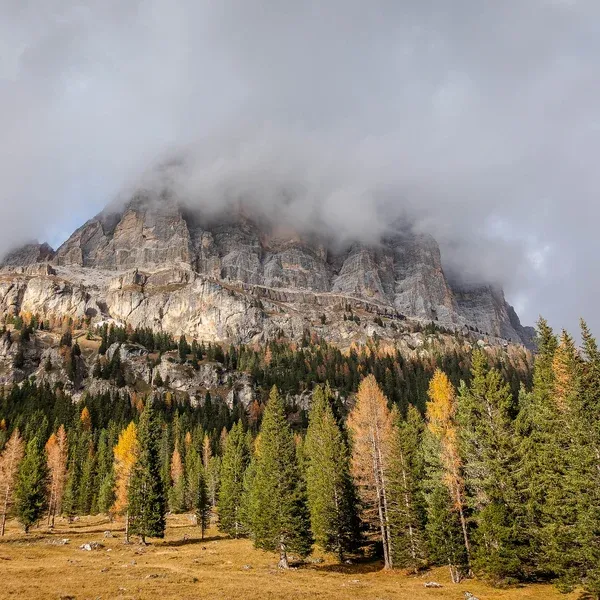
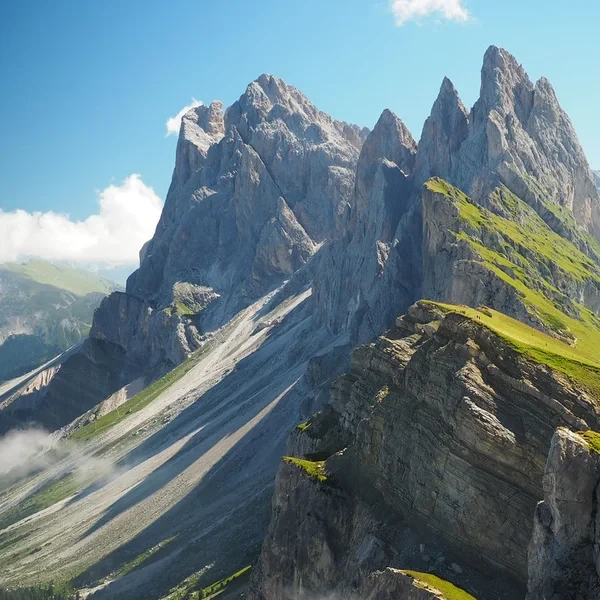
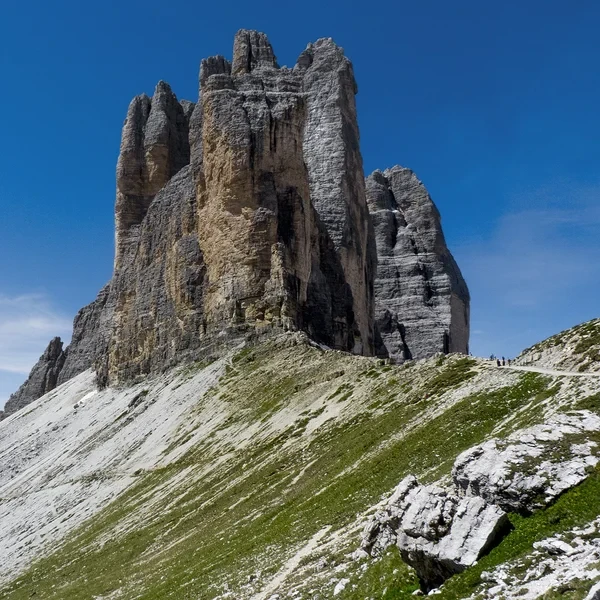
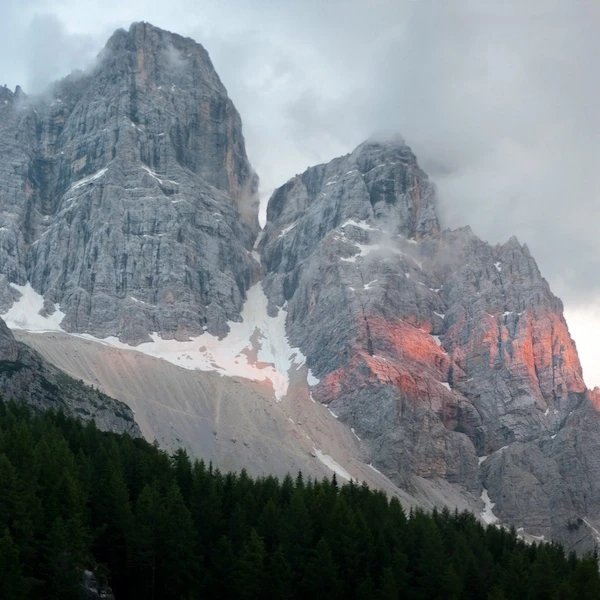
Northeastern Italy lay under an ancient Triassic sea, warm and dotted with islands. The Dolomites are the seabed of that era, since lifted. Dolomite rock tends to fracture vertically rather than wear smooth, producing sheer walls, sharp ridgelines, and isolated towers that shoot straight up from meadow level rather than building gradually from foothills.
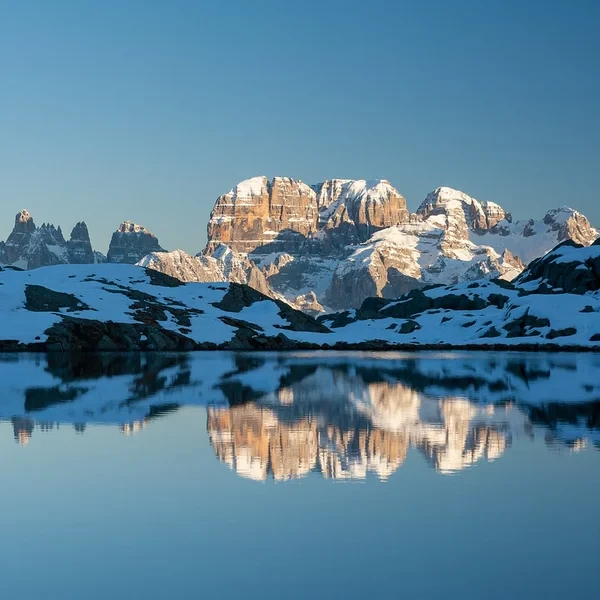
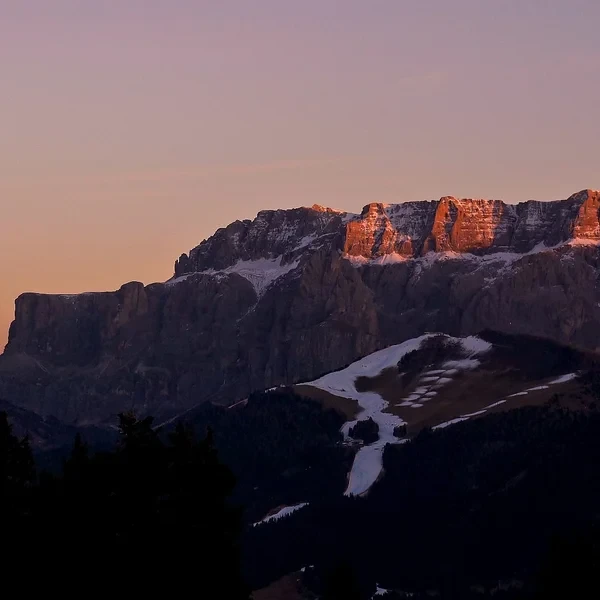
At sunset, the rock glows pink and deep orange in a phenomenon Ladin-speaking locals call enrosadira.
How Do the Landscapes Compare?
The Alpine range spans several countries. It contains glaciers, summits higher than those of the Dolomites, and terrain that spans Mediterranean foothills, beech forests, granite plateaus, and permanent ice fields. It is too large and varied to generalize.
The Dolomites are compact. Their core clusters around a series of high mountain passes in northeastern Italy. The highest point, Marmolada (Punta Penìa), reaches 3,343 m10,968 ft. Its north face is home to the largest glacier in the Dolomites.
What the Dolomites lack in scale, they concentrate in a small area. Within a single day’s drive, you can stand beneath the Tre Cime di Lavaredo (Drei Zinnen), look across to the Marmolada ice cap, and see the Sassolungo (Langkofel) group on the horizon. The equivalent visual sweep in the broader Alps would require days of travel between separate massifs.
The valley character is different too. Typical alpine valleys in Switzerland or Austria are wide, U-shaped, and glacially carved, with gentle river flats on the floor. Dolomite valleys are often narrower and more abrupt - the pale towers rise sharply from forest and pasture without the gradual build-up of foothills that characterizes most alpine terrain. The effect is disorienting in a specific way: the scale feels compressed, the skyline more vertical.
How Does Hiking Compare?
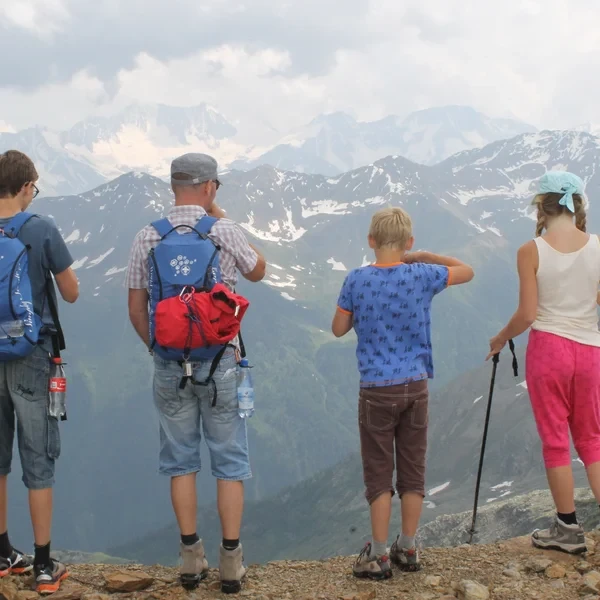
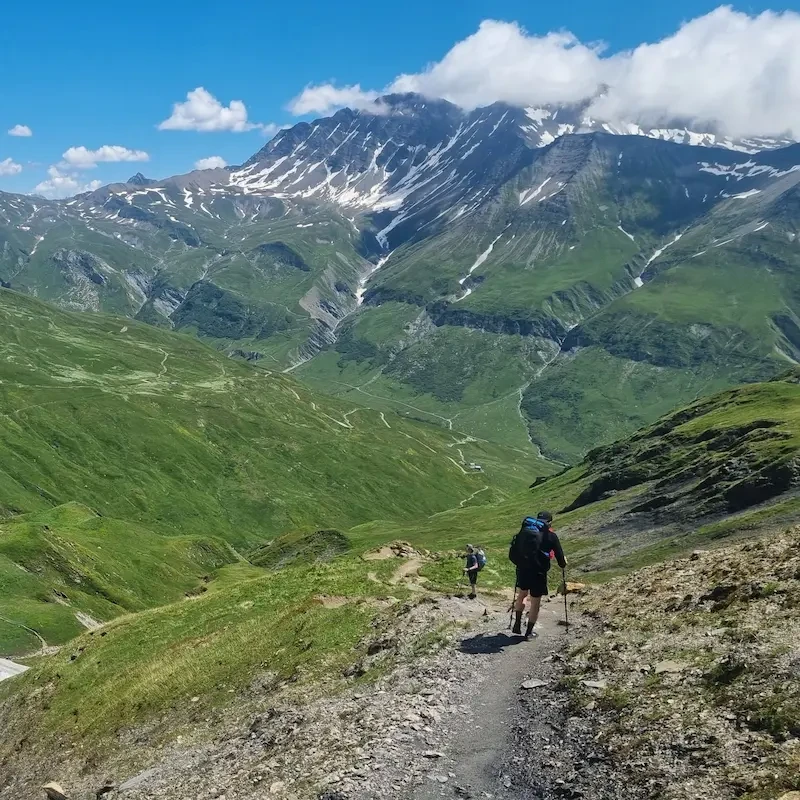
The broader Alps offer radically different hiking experiences depending on country. The Tour du Mont Blanc crosses France, Italy, and Switzerland. The Swiss National Park offers near-wilderness conditions. Austrian trails range from well-signed family paths to serious technical alpine terrain with minimal infrastructure between huts.
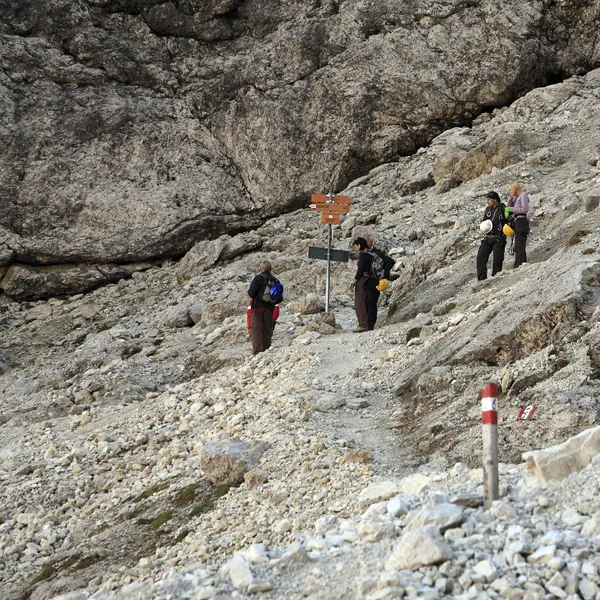
The Dolomites have a defining characteristic: density. Marked trails, mountain huts (rifugios), and via ferratas are concentrated into a relatively small area. On the Alta Via 1, the CAI stages run from 3 to 8 hours between staffed huts serving hot meals and dormitory beds. This makes multi-day hiking accessible without a tent or cooking gear. The trade-off is that the popular huts book up months in advance. Do not expect to walk in off the trail in August and find a bed. For details on how the rifugio system works, see our mountain hut guide.
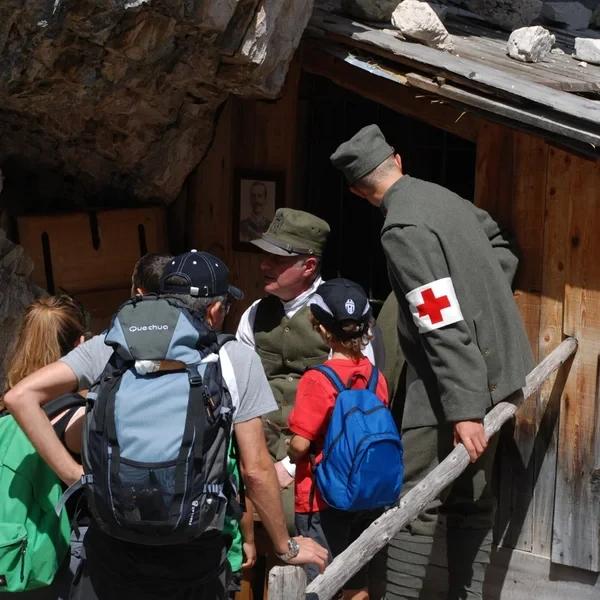
Via ferrata - iron-rung climbing routes fixed to rock faces with cables and steel stemples - is very much part of the Dolomites, where World War I left its mark. The surrounding cliffs keep tunnels, galleries and artillery emplacements that you can explore on foot - the Cinque Torri Great War museum and the Lagazuoi tunnel system are two of the most accessible examples.
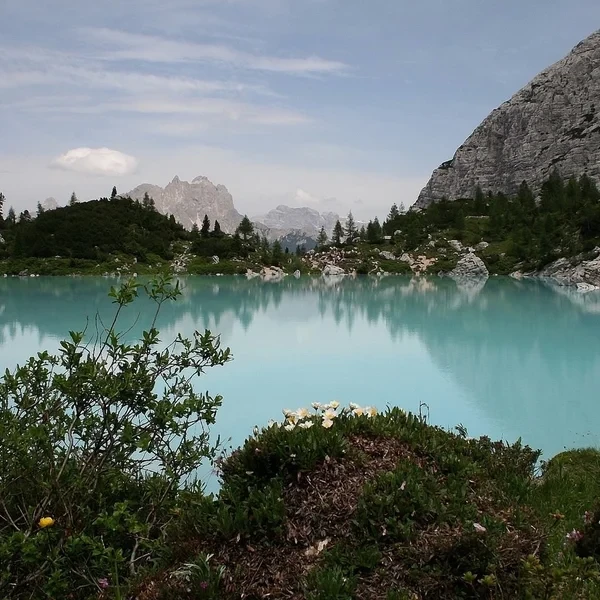
The concentration of famous terrain in a compact area also concentrates crowds. July and August at Tre Cime di Lavaredo means the trails are very busy. Several access roads to the major sites (Lago di Braies, Alpe di Siusi) are closed to private traffic at certain hours of the day and served by public transport, and a seasonal traffic restriction is under study at Passo Gardena (Grödnerjoch), under the Dolomites Low Emission Zone project, with no rule applicable yet. In a remote Austrian or Swiss valley, you can walk for hours without encountering another group. In the Dolomites, you cannot count on that anywhere near the major landmarks.
Should You Visit the Dolomites or the Broader Alps?
The question is not which is better. The question is what you are actually after.
If you want variety of terrain, glaciers, and the ability to cross between countries on multi-day routes, the broader Alps deliver options the Dolomites cannot match. The Tour du Mont Blanc, the Swiss Via Alpina, the long Austrian ridge walks - these are longer, more remote, and more geologically varied.
If you want the specific visual character of vertical pale rock, a dense network of staffed rifugios, via ferrata with genuine WWI history, and the cultural texture of the Ladin-speaking valleys, nowhere else offers all of it together. The Dolomites have been a UNESCO World Heritage Site since 26 June 2009, for the beauty and uniqueness of their landscape and their geological and geomorphological importance; the listing covers nine systems.
Do not come expecting wilderness. The infrastructure is excellent because the area is built for tourism. Book early, accept the crowds at the landmark viewpoints, and go deeper into the lesser-known massifs - Pale di San Martino (Bleiche Berge), Dolomiti di Brenta, Zoldo valley - if you want quieter terrain without leaving the geology behind. For a starting point, see our best hikes in the Dolomites and logistics guide.