Why is Cortina d’Ampezzo a great base for hiking the Eastern Dolomites?
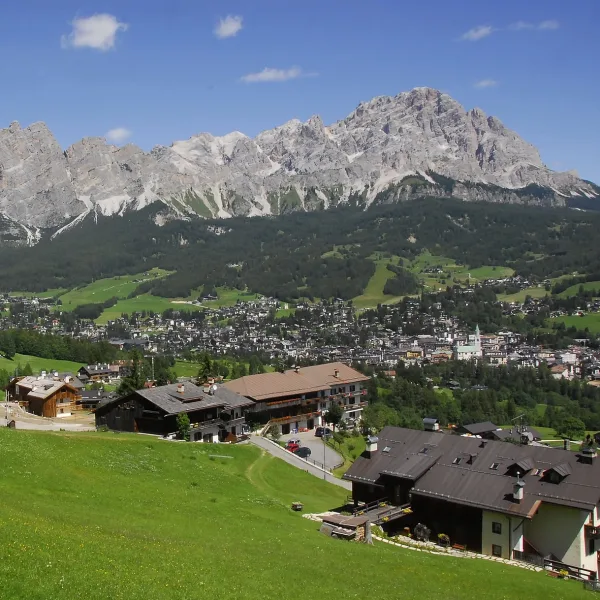
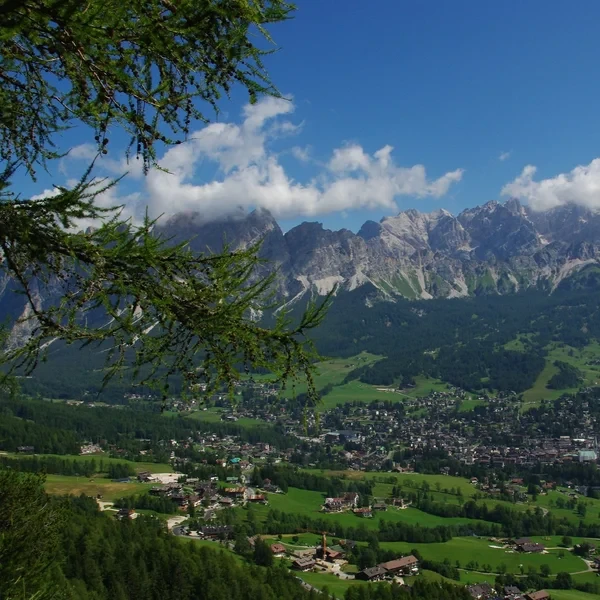
Cortina d’Ampezzo sits in the Boite valley, encircled by five distinct mountain groups - the Cristallo to the north, the Tofane to the west, the Cinque Torri and Nuvolau plateau to the southwest, the Croda da Lago to the south, and the Sorapis group to the east. No other town in the eastern Dolomites gives you this range of terrain within a single day’s reach without moving your accommodation.
Cortina is a resort known worldwide, and its direct bus connections from Venice airport work in your favour as a summer hiker. Ignore the luxury hotel branding. Cortina is, at its core, a mountain town built for access.
The surrounding peaks are part of the Ampezzo Dolomites Natural Park.
What Elevation and Geography Do You Need to Know About Cortina?
The valley floor at Cortina is broad and flat by Dolomite standards, carved by glacial action and bisected by the Boite river.
This starting elevation matters for two reasons. First, high trailheads are easier to reach: the lifts from Cortina spare you most of the climb. Second, acclimatisation is less of an issue than it would be arriving from sea level directly into the high mountains - one afternoon in Cortina is usually enough before tackling full-day routes.
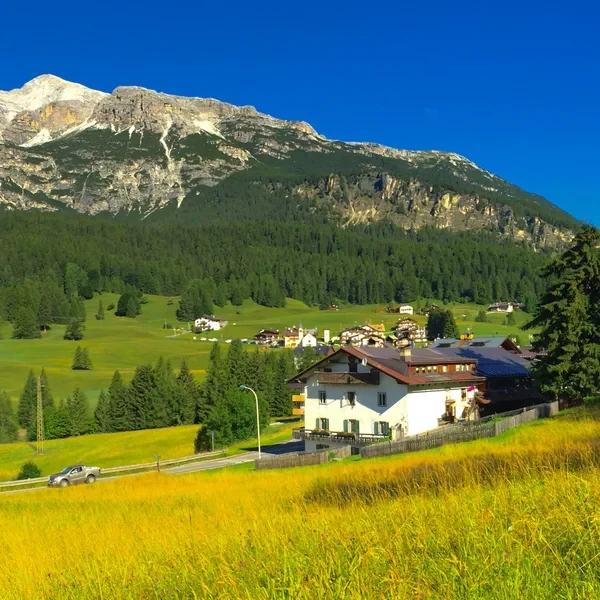
The geology is classic Ampezzo Dolomites: pale grey and ochre limestone towers erupting from dark forest and alpine grassland. Unlike the western Dolomites around Bolzano, which have a more layered plateau character, the Cortina area features more isolated spires and vertical faces - ideal for dramatic viewpoints from the trail.
Which Hikes Should You Do From Cortina?
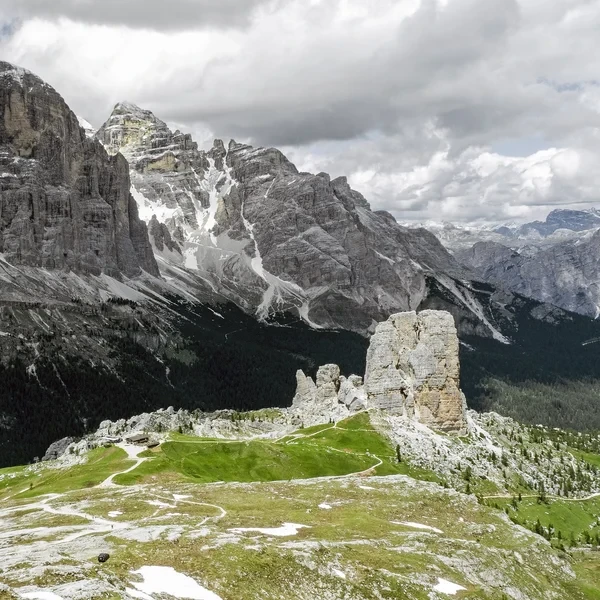
The Cinque Torri circuit is the single best introduction to the Cortina area. Five freestanding limestone pillars, surrounded by WWI trenches open to the public. Rifugio Scoiattoli and Rifugio Averau are both on the circuit - have lunch at one of them and you have the makings of a full day. The Rifugio Nuvolau perched at 2,575 m8,448 ft adds serious elevation if you want a harder objective. Access is via the 5 Torri chairlift from Bai de Dones on the SS48 road - no car needed if you take the Dolomiti Bus from town.
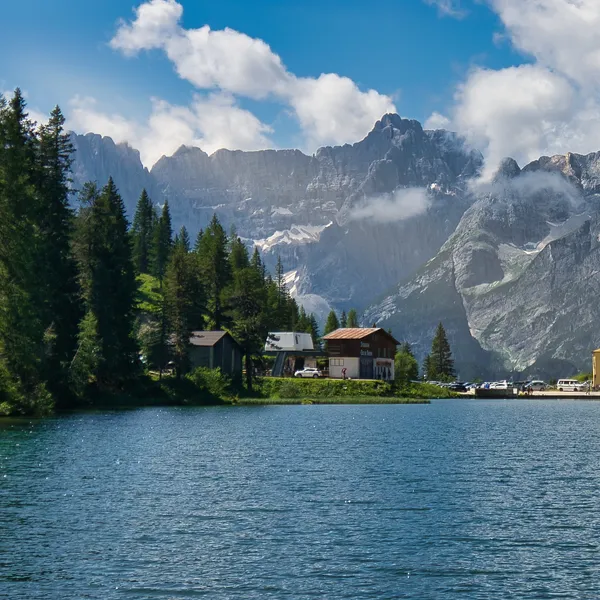
The Lago di Sorapis trail is the most technically demanding hike accessible from Cortina and the one most visitors underestimate. The lake, home to Rifugio Vandelli (1,926 m6,319 ft), is an improbable shade of turquoise. The approach involves fixed-chain sections and a narrow ledge traverse above exposed drops. This is not a beginner route. Budget 5 to 6 hours round trip, bring a helmet if you have one, and do not attempt it in wet conditions. The trailhead at Passo Tre Croci is on the SS48 east of Cortina.
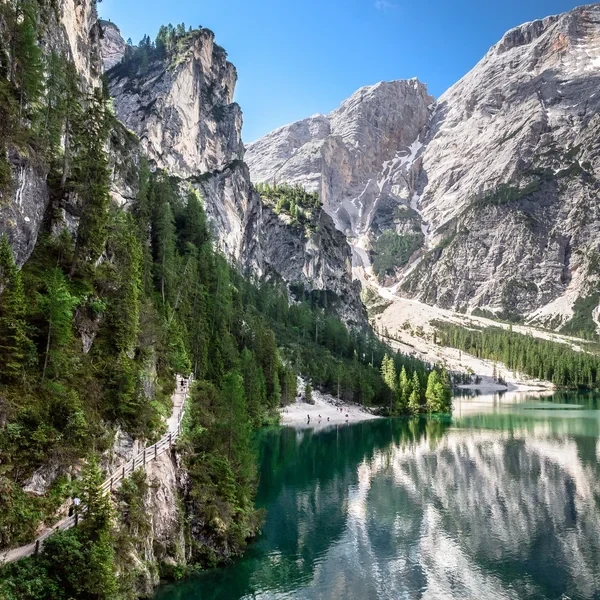
Lago di Braies (Pragser Wildsee) is not directly above Cortina but is the most visited lake in the Dolomites and a natural pairing with a Cortina base. The lake lies to the northwest, via the Val Pusteria. The flat circuit around the lake takes under 2 hours. According to the official Prags valley portal, private vehicle access is closed from 09:00 to 16:00 between 1 July and 15 September (2026 season), unless you hold an online reservation or a valid transit permit; otherwise use public transport, walk or cycle. Prices and exemptions are covered in our access booking guide.
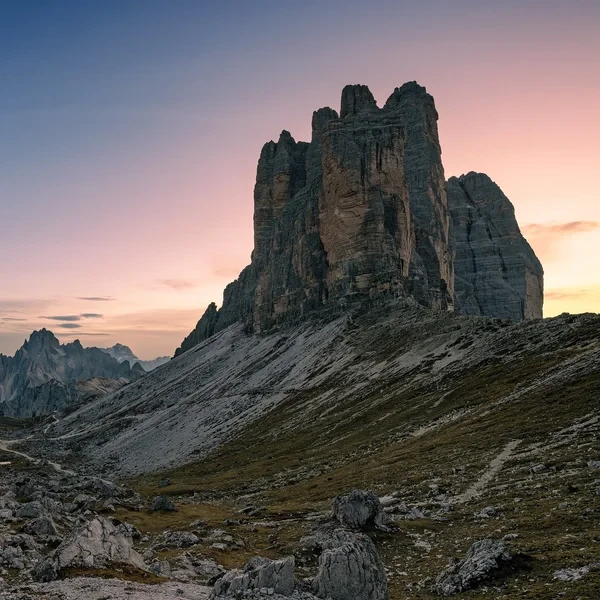
The Tre Cime circuit starts from Rifugio Auronzo, reached by a toll road of about 6 km3.7 mi that starts near Lago d’Antorno, by online booking only (our access booking guide gives the price). The three towers - Cima Grande, Cima Ovest, and Cima Piccola - are the defining image of the Dolomites. The 10 km6.2 mi loop starting from Rifugio Auronzo at 2,333 m7,654 ft is moderate, not easy: the altitude means cold, wind, and rapid weather changes. Depart early and be off the high plateau before 14:00 in summer. If you are basing yourself in San Candido for the Tre Cime, see also our San Candido hiking guide.
Which Rifugi Are Worth the Detour From Cortina?
The Cortina area has an exceptional density of high-quality rifugi. These are the ones where the food, views, and accessibility combine well.
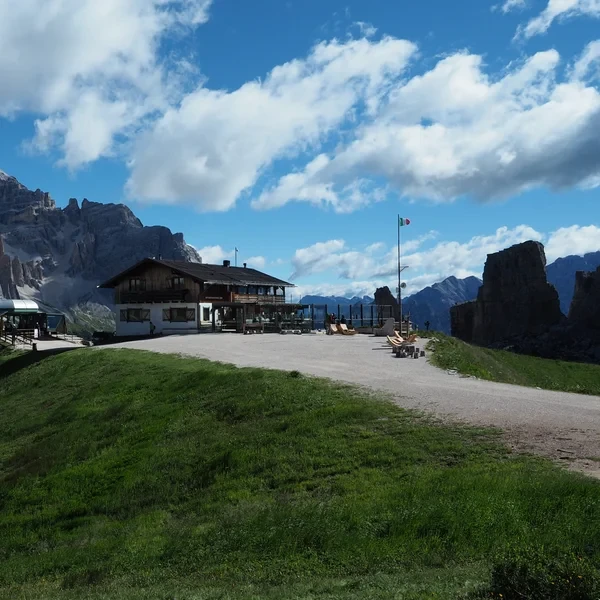
At 2,255 m7,398 ft on the Cinque Torri plateau, reachable by chairlift. Book early for overnight beds.
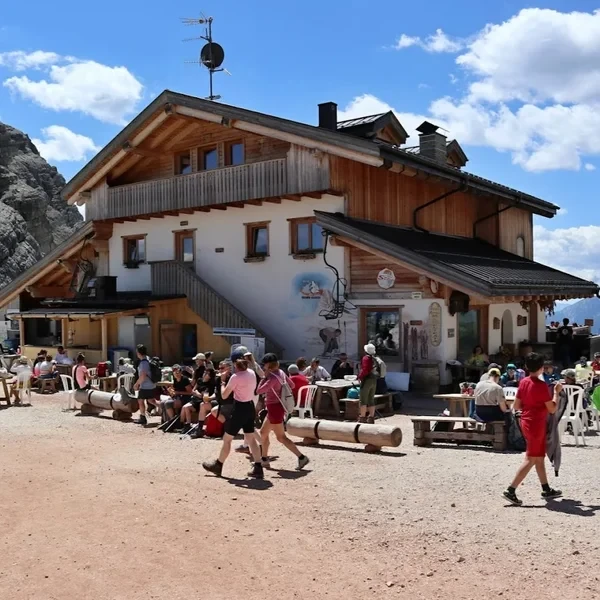
A short walk above Rifugio Scoiattoli, with a wider panorama taking in the Tofane group directly north. Good for a mid-morning coffee stop before continuing the Cinque Torri loop.
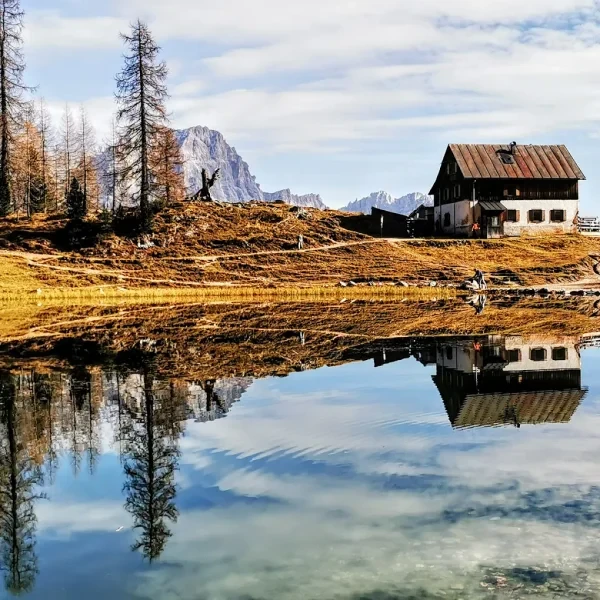
A longer approach from Cortina (roughly 90 minutes each way from the Campo di Sotto trailhead above town, through pine forest), but the reward is a private lake setting at the base of the Croda da Lago massif. No cable car access - you walk in. Fewer crowds than the Cinque Torri rifugi.
Named after the legendary Cortina guide Angelo Dibona, this hut sits at the western base of the Tofane massif. The terrace looks out across the Boite valley. Reached by a short forest road from the Cortina-Falzarego highway, with the final climb roughly 20 minutes on foot from the upper car park.
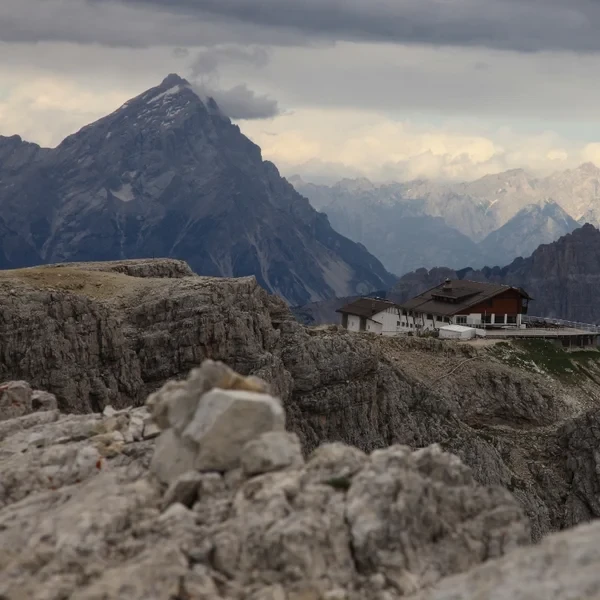
The highest rifugio on this list at 2,752 m9,029 ft, reached by the Lagazuoi cable car from Passo Falzarego. Book as early as you can.
For a full overview of how rifugio booking works, what to bring, and what to expect, read the mountain hut guide.
How Do You Get to Cortina d’Ampezzo?
Cortina has no train station. The nearest railhead is Calalzo di Cadore, to the south. From there, Cortina Express and ATVO buses make the connection; timetables and tickets on their websites.
The more direct option from Venice is the Cortina Express service, which runs directly from Venice Marco Polo airport (VCE) to Cortina. No train change required.
By car from Venice: take the A27 autostrada north to Longarone, then the SS51 through the Cadore valley. The SS51 is the main artery into Cortina from the south. From the north (Innsbruck), approach via Dobbiaco and the SS51 through Carbonin.
The full logistics breakdown for getting to any part of the Dolomites is in our complete transport guide.
When Should You Hike From Cortina?
The hiking season runs from early July to late September. Outside this window, many trails at altitude are snow-covered or icy, and lifts follow their own dates: in 2026 the Cinque Torri chairlift ran from 6 June to 11 October, 9:00 to 17:00.
July is when the full season opens. Trails are clear in most years, and rifugi open on their own dates, and the meadows are at peak green. Afternoon thunderstorms are common - start hikes by 07:30 and be below the ridgeline by 13:00.
August is the busiest month by a wide margin. The Cinque Torri parking lot fills early. The Rifugio Scoiattoli terrace gets crowded fast. The Lago di Sorapis trail sees queues at the chain sections. If you have flexibility, avoid the first three weeks of August.
September is the best month to hike from Cortina. Crowds drop sharply after the Italian school holidays end. The light is lower and warmer, the larch trees begin turning gold from mid-September, and rifugi are no longer booked solid. Temperatures are cooler - pack a proper insulating layer, as mornings can be close to freezing above 2,000 m6,562 ft.
For a broader look at seasonal conditions across the entire Dolomites range, see the best time to visit the Dolomites.
Where Should You Base Yourself in the Cortina Area?
Cortina town centre is the practical default. All bus lines terminate at the piazza, and the concentration of restaurants, supermarkets, and gear shops is unmatched in the eastern Dolomites. If you are arriving by bus from Venice, you have no logistical reason to stay anywhere else.
Pocol, a hamlet near Cortina, is worth considering if you have a car and your primary objective is the Cinque Torri and Falzarego area. You save 30 minutes of driving each morning. It is quieter, cheaper, and has direct trail access. The downside: no shops, limited restaurant options, and you are dependent on your own transport.
Misurina, east of Cortina, is the best option if Tre Cime is your main target. The toll road to Rifugio Auronzo starts nearby, close to Lago d’Antorno. Accommodation here fills quickly - book at least 3 months ahead for July and August.
For hikers planning to explore the broader eastern Dolomites, Cortina pairs well with a night in Dobbiaco (Toblach) to the north - see our Dobbiaco hiking guide - or with the Alta Badia valley to the west, covered in our Alta Badia and Corvara guide. For the Val Gardena area further west, the Ortisei guide covers the Seceda and Alpe di Siusi access. Compare all five town bases side by side in our Best Towns for Hiking guide.
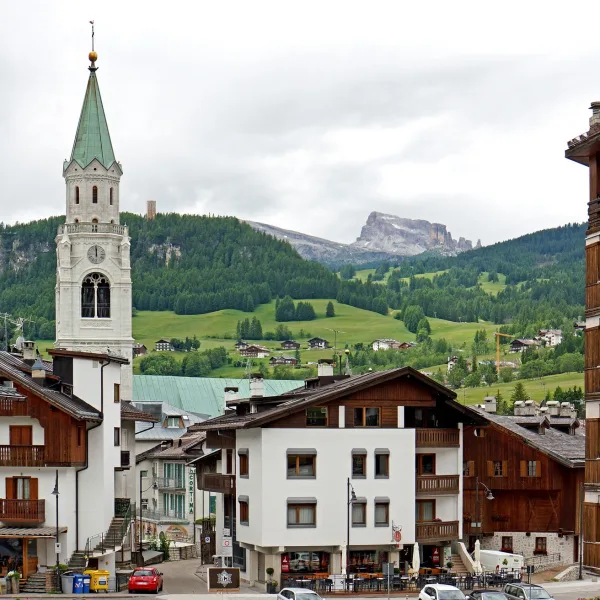
Hikes around Cortina d'Ampezzo
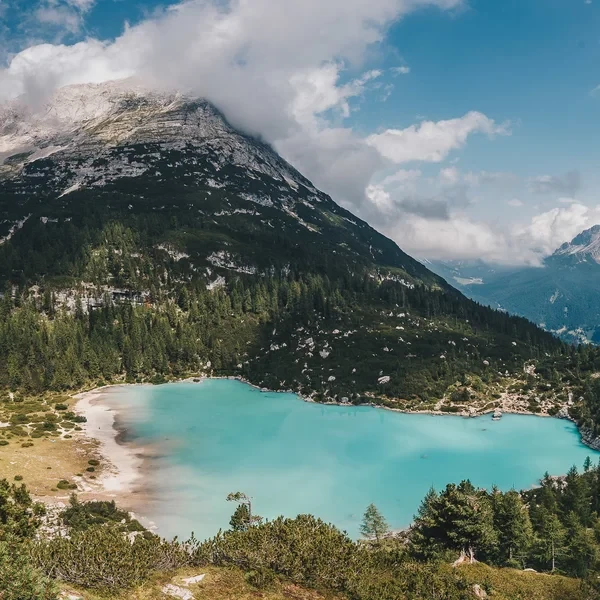
Lago di Sorapis
A glacial turquoise lake hidden beneath the Sorapis massif near Cortina d'Ampezzo. The trail from Passo Tre Croci crosses cable-aided rock traverses to reach one of the most photographed spots in the Dolomites.
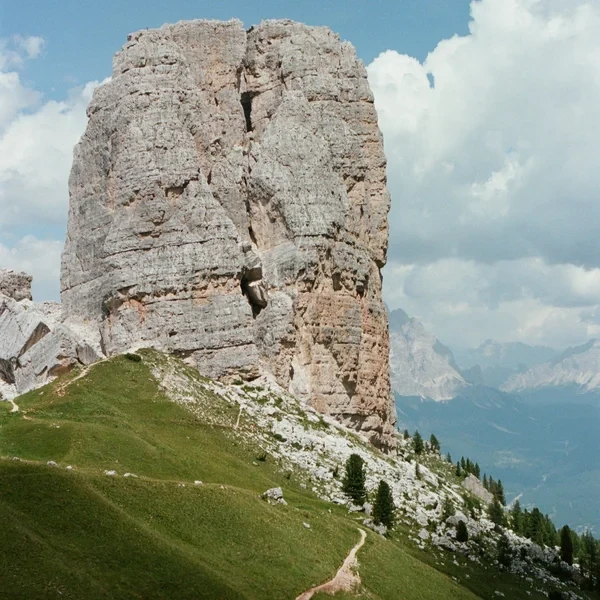
Cinque Torri Loop & WWI Open Air Museum
Explore one of the most famous rock formations in the Dolomites. This guide covers the WWI trenches, the loop around the five towers, and the climb to the historic Rifugio Nuvolau.
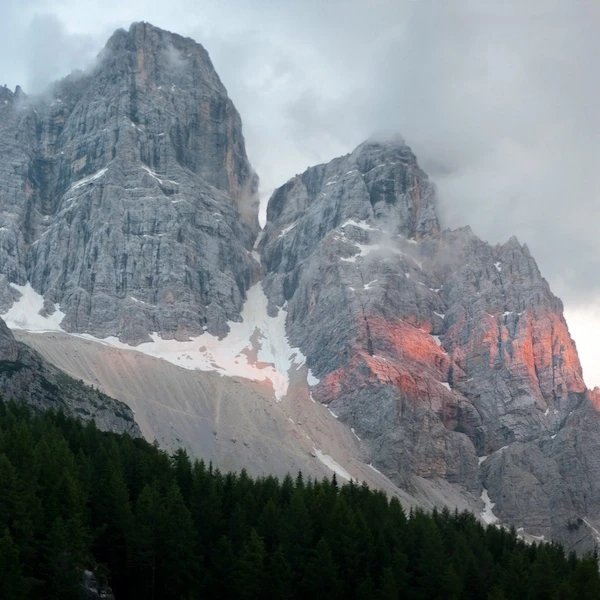
Alta Via 1
The definitive multi-day journey across the heart of the Dolomites. Spanning 118 km73.3 mi of rugged limestone terrain, this classic trek takes you from the emerald waters of Lago di Braies to the historic streets of Belluno, staying in world-class mountain huts along the way.
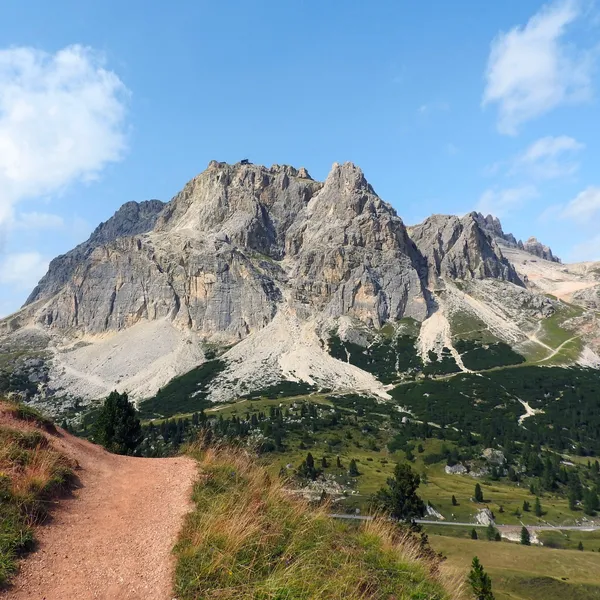
Lagazuoi - Loop from Armentarola & Great War Tunnel
The walking loop from Armentarola via the Forcella Lagazuoi, the lake and Rifugio Scotoni, or the Passo Falzarego cable car and the descent through the Great War tunnel.
Huts around Cortina d'Ampezzo
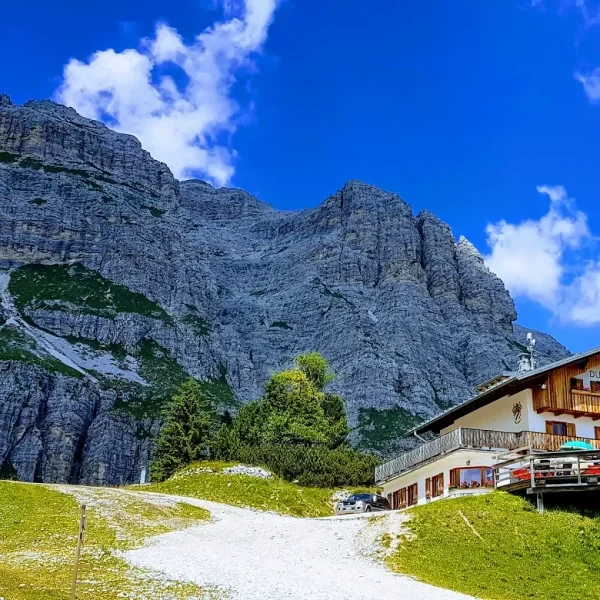
Rifugio Duca D'Aosta
A small, historic refuge on the lower slopes of the Tofane massif, offering a quiet base for climbers tackling the Tofana di Rozes south face routes.
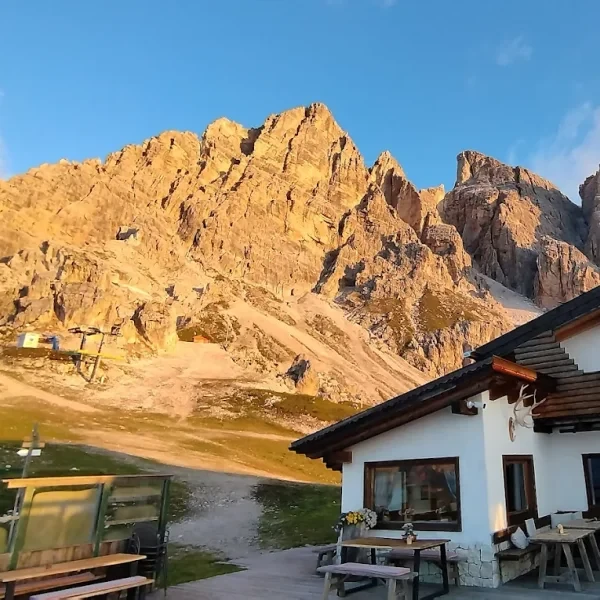
Rifugio Pomedes
A high-altitude refuge on the flanks of the Tofane massif, serving as the gateway to the famous Galleria del Castelletto WWI tunnel and the Tofana di Rozes summit.
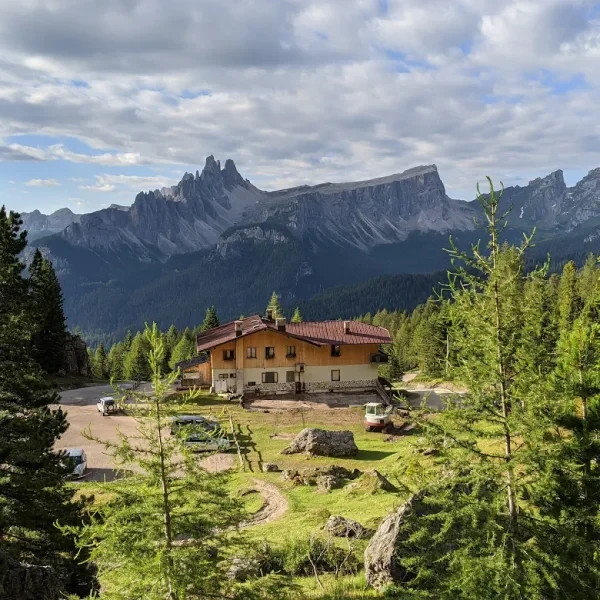
Rifugio Angelo Dibona
A well-equipped refuge named after one of the greatest Dolomite guides, nestled in a larch forest at the foot of the Tofane with routes for all abilities.
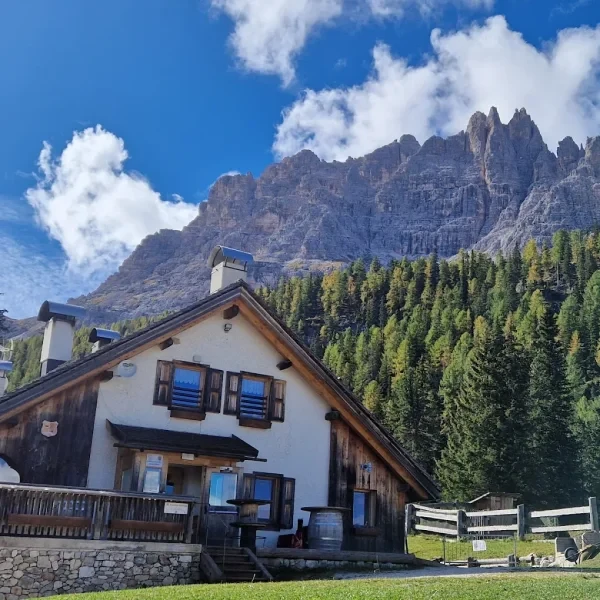
Malga Federa
A tiny alpine dairy farm turned mountain lodge perched above the shores of Lago Federa, one of the most photographed lakes in the Cortina basin.
Passes around Cortina d'Ampezzo
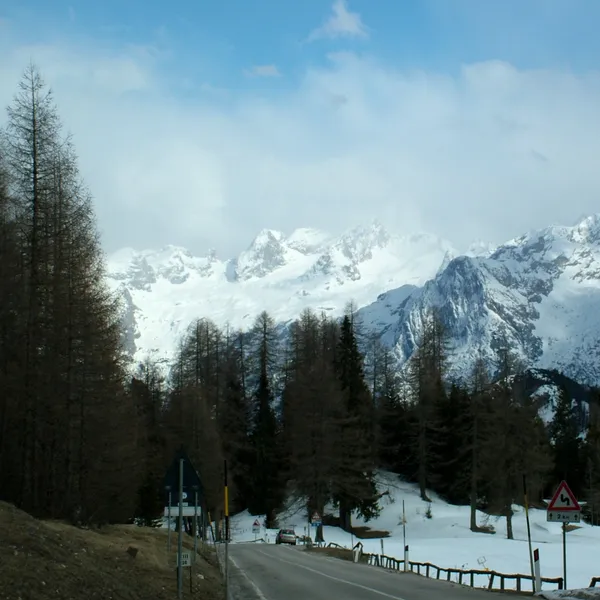
Passo Tre Croci
Passo Tre Croci, between Cortina d'Ampezzo and Misurina, is where the trail to Lake Sorapis begins. You can reach it by summer bus, and two trails climb from here to Rifugio Vandelli.
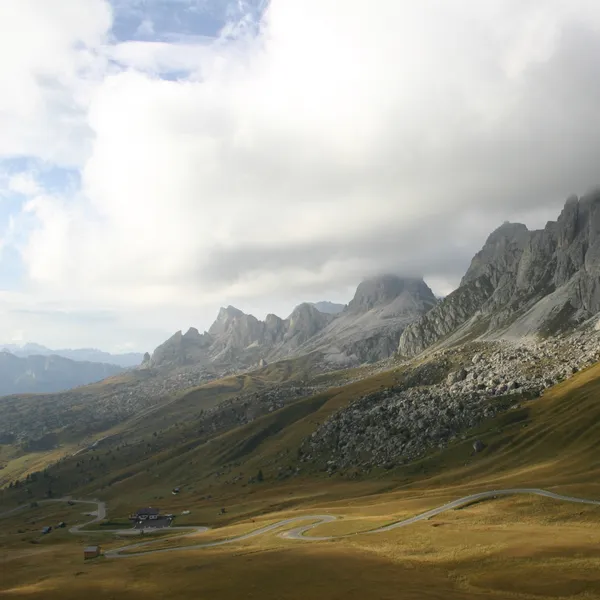
Passo Giau
Passo Giau links Cortina d'Ampezzo and Selva di Cadore. How to reach it by summer bus from Cortina, what starts from the pass on foot, from the Ra Gusela via ferrata to Rifugio Nuvolau, and when to go.
Passo Falzarego
Passo Falzarego, on the Great Dolomites Road above Cortina, is the gateway to the Lagazuoi. How to get there by bus or car, what you can do on foot or by cable car, and what remains of the 1915-1917 front.
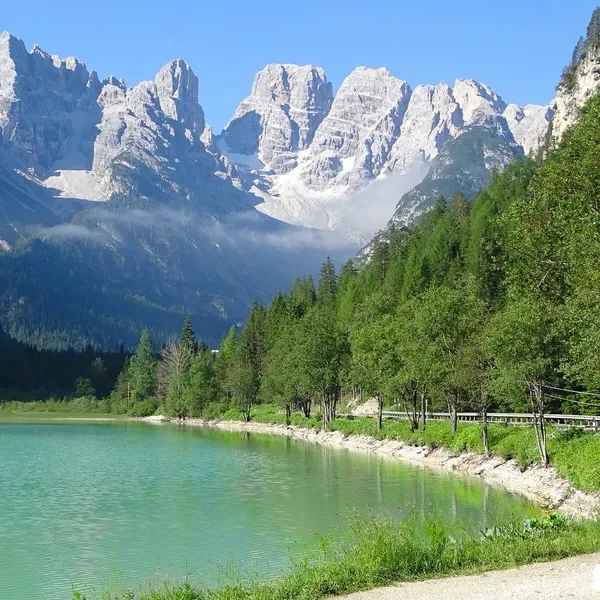
Passo Cimabanche (Gemärk)
Passo Cimabanche is the high point of the old railway between Dobbiaco and Cortina d'Ampezzo, now a cycle path. Here is what you will see along the way, from the lakes of the Val di Landro to the view of the Tre Cime.
Tours starting from Cortina d'Ampezzo
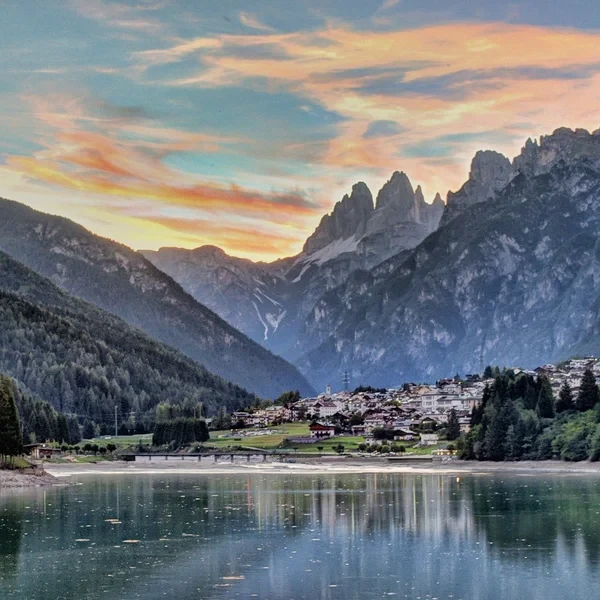
Dolomites Self-Guided Hiking around Cortina
A 7-day hotel-based hiking holiday around Cortina d'Ampezzo. Five day walks to Cinque Torri, the Tofane massif, Lake Sorapis and the iconic Tre Cime di Lavaredo circuit.
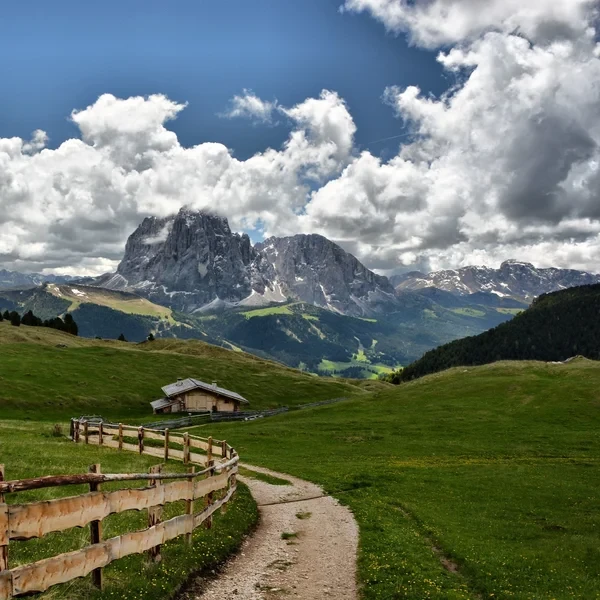
Grande Traverse of the Dolomites - Bolzano to Cortina
A 10-day self-guided traverse from Bolzano to Cortina crossing the Rosengarten, Alpe di Siusi, Puez-Odle plateau, Lagazuoi and the Tre Cime di Lavaredo - all with refuge half-board throughout.
Guided Alta Via 1
Seven days on the classic Alta Via 1 from Falzarego Pass to Passo Duran. Cinque Torri, Croda da Lago, Mont Pelmo, and the Civetta massif with an EU-certified guide and full board throughout.
Guided Dolomites - Women Only
A seven-day women-only guided hiking week around Cortina d'Ampezzo, led by a female EU-certified guide. Cinque Torri, Tre Cime, Lake Sorapis, and the Tofane massif - hotel-based with all transfers.