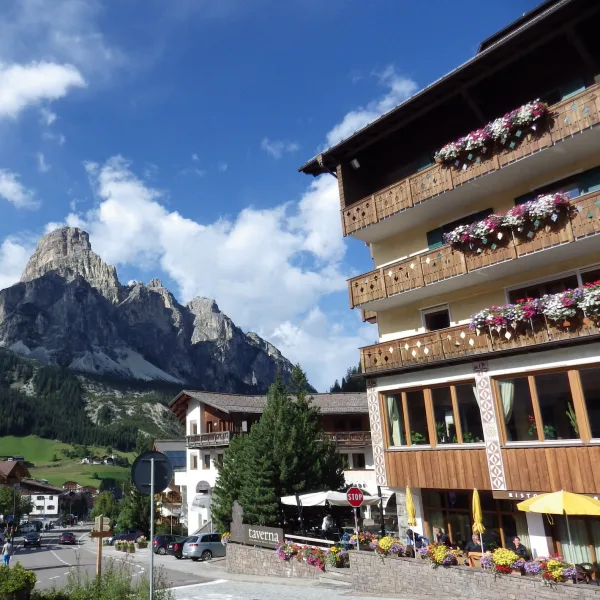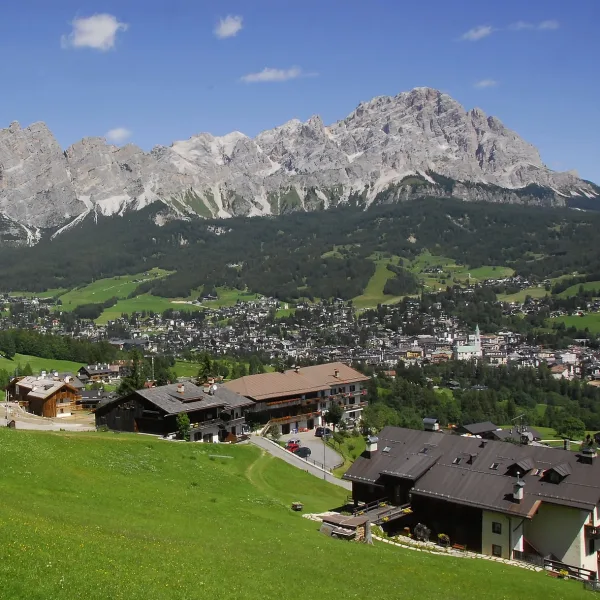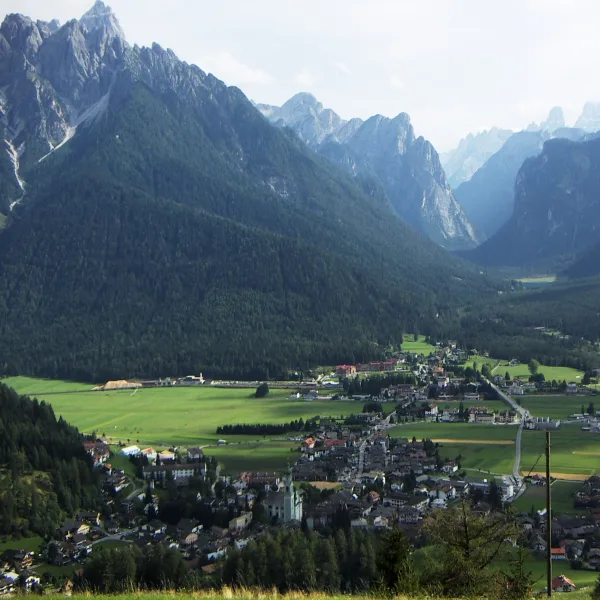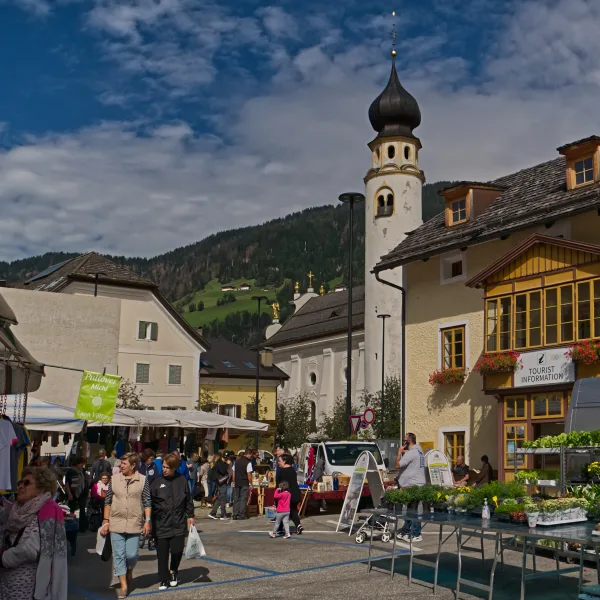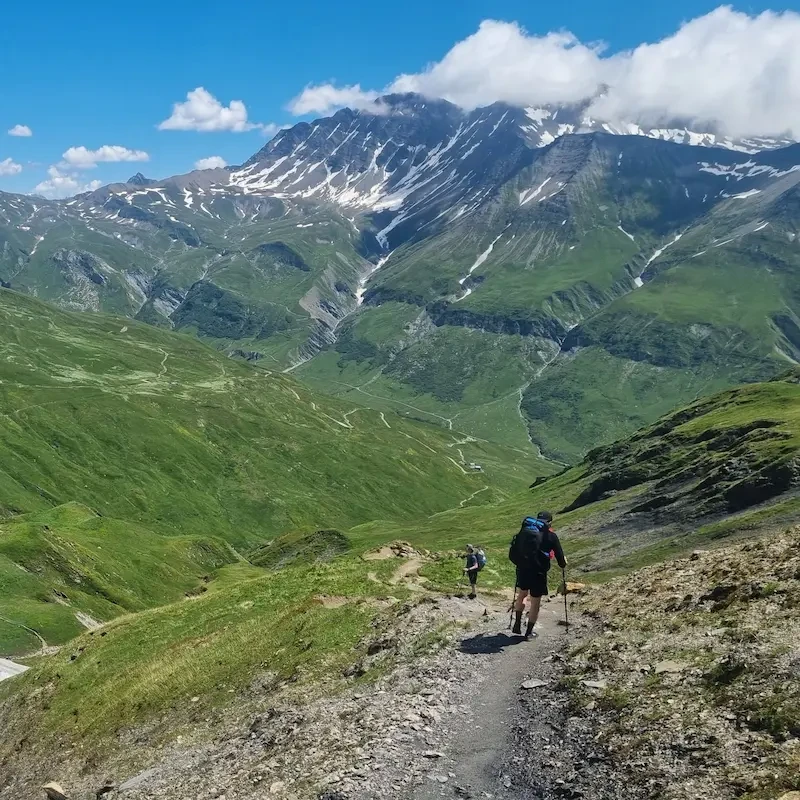
Why is Ortisei a great base for hiking Val Gardena and the Western Dolomites?
Val Gardena (Gröden) is a north-south valley carved into the western Dolomites, running between Bolzano and the Sella massif. It is not the most dramatic valley - that distinction goes to the raw limestone basins further east. What makes Val Gardena exceptional is infrastructure: three separate cable car systems deliver hikers from the valley floor at 1,234 m4,049 ft to high ridgelines and plateaux within minutes. No other single valley in the Dolomites compresses this much high-altitude terrain into one base.
The valley is Ladin-speaking at its core. Ortisei (St. Ulrich), Santa Cristina (St. Christina), and Selva di Gardena (Wolkenstein) are the three main towns, each at a progressively higher elevation. The wood-carving tradition visible in Ortisei’s shop windows is not a tourist invention. You will see workshop signs in three languages: Ladin, German, and Italian.
For travel logistics, read the complete guide to getting to the Dolomites before planning your base.
What Are the Best Hikes from Ortisei?
Ortisei (St. Ulrich) is where most hikers base themselves in Val Gardena, and for good reason: it anchors two entirely different mountain worlds via two gondola systems. Do not confuse them.
The Seceda gondola from Ortisei climbs to the ridge, depositing you above the Odle (Geisler) massif. The short summit loop takes under two hours and requires no technical skill - just a head for narrow paths with steep drop-offs on one side. The fractured limestone spires of the Odle drop vertically to green Val di Funes below while the opposite view opens west across the entire Adige valley. The full-day circuit (descending via Troier Hut and Mastlé Alpine Hut before climbing Monte Pic da Cristauta) is a 13 km8.1 mi loop with 930 m3,051 ft of elevation gain.
The connection from Ortisei to the Alpe di Siusi (Seiser Alm) plateau runs via the Mont Sëuc cable car, which lifts you from the valley floor to the Mont Sëuc station on the northern edge of the plateau - the main gateway to Europe’s largest high-altitude alpine meadow. The plateau covers 56 km²21.6 mi² of rolling pasture, with the anvil-shaped Sciliar (Schlern) to the south and the Sassolungo (Langkofel) spires to the east. The Panorama Traverse circuit covers 15 km9.3 mi with 450 m1,476 ft of elevation gain. Do not skip the Hexenbänke (Witches’ Benches) rock formations at the Sciliar edge: the cliff drops cleanly away to the valley 800 m2,625 ft below.
Do not confuse the gondolas: the Alpe di Siusi cable car from Siusi (Seis) village lands at Compatsch on the south side of the plateau. The Mont Sëuc cable car from Ortisei lands at the Mont Sëuc station on the north side. Both put you on the same plateau, just at opposite ends. From Ortisei, the Mont Sëuc cable car is the correct choice.
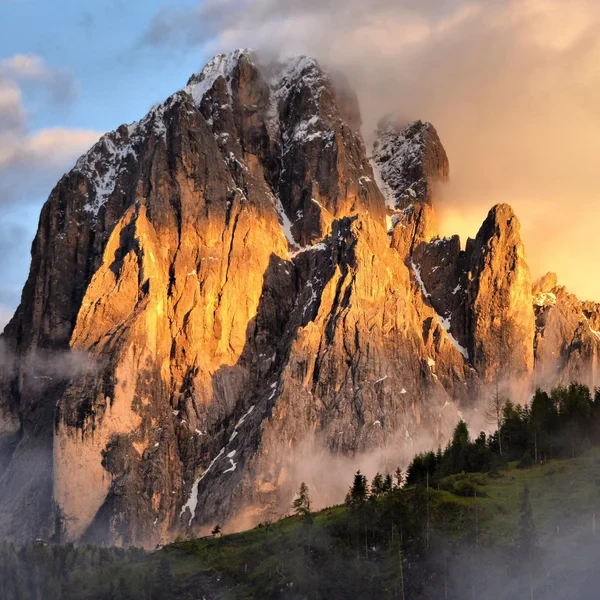
What Makes Val di Funes Worth a Dedicated Day?
Val di Funes (Villnöss) branches off to the north of Val Gardena and is a different experience entirely. The valley is quieter, less serviced, and largely free of the ski-resort infrastructure that dominates Val Gardena. The reason most people know it: the Santa Maddalena (St. Magdalena) church.
The small white church of San Giovanni in Ranui sits on a hillside above the village of Santa Maddalena, with the entire Odle massif rising as a vertical backdrop. It is the most reproduced image in the Dolomites - the photograph appears on every Italian Alps calendar. What the photograph does not convey is the silence. Arrive before 08:30 and you will have the meadow below the church entirely to yourself.
From Santa Maddalena, the trail network enters the Puez-Odle Nature Park (Parco Naturale Puez-Odle). The Adolf Munkel Trail traverses the base of the Odle spires on the north side - 10 km6.2 mi of path that stays below the tree line while the rock towers fill the entire view above. It is not a summit route. It is a base-of-cliff route, which is more impressive.
For a higher objective, the approach to Rifugio Firenze (Regensburger Hütte) can be done from the Zanser Alm car park in Val di Funes. The plateau around the hut is where the Odle spires finally seem reachable - you are standing on the same level as their bases, not looking up at them from the valley.

Where Should You Hike from Selva di Gardena?
Selva di Gardena (Wolkenstein) sits at the upper end of the valley and has its own cable car systems pointing in different directions. The Dantercepies gondola lifts you above the Sella group, with trail access to the Sella Pass (Passo Sella) circuit and the high routes toward Piz Boè. This is more demanding terrain than Seceda - expect paths with fixed cables and some exposure.
The Plan de Gralba area below Selva is the access point for gentler Sella Pass hiking without the technical sections. The road over Passo Sella between Selva and Canazei remains open to traffic, but it has already seen temporary traffic bans tested in 2017. It falls under the Dolomites Low Emission Zone project, which still has no joint regulation: set out from Selva in the morning and check the pass status before crossing by car.
If you are choosing between Ortisei and Selva as a base: Ortisei for Seceda and Alpe di Siusi access; Selva for Sella group and Puez-Odle approaches. The two towns are neighbours in the same valley.
Which Rifugi Are Worth Targeting in Val Gardena?
The valley has strong rifugio options at multiple elevations, covering both day hikes and overnight stays.
In the Puez-Odle Natural Park above Selva, this is the standout option. Positioned directly beneath the Odle spires on a broad grassy plateau. Book early in July and August.
On the Sciliar plateau above the Alpe di Siusi. Technically not Val Gardena - it is accessed from the Alpe di Siusi side - but within reach of a long day from Ortisei via the Mont Sëuc cable car. The hut sits on a completely flat plateau that feels unlike any other summit in the Dolomites.
For rifugio etiquette, booking procedures, and what to expect overnight, read the mountain hut guide. Key point: card machines fail in storms. Carry 40 to 60 EUR$46 to $70 in cash per person per night.
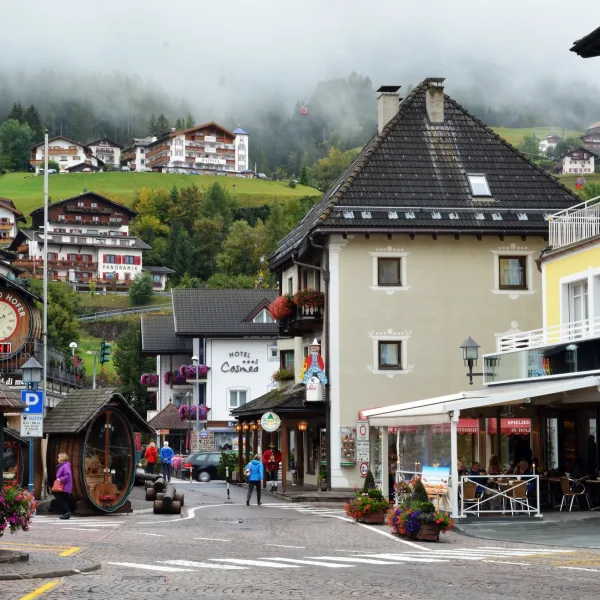
How Do You Get to Ortisei and Val Gardena?
From Bolzano, Val Gardena is reached by road via Ponte Gardena (Waidbruck). By public transport: line 350 (Gröden - Waidbruck - Bozen) serves the valley, with one or two departures an hour from Ortisei (2026 timetable on südtirolmobil). Line 351 connects Ortisei to Chiusa (Klausen) and, on some runs, to Bressanone (Brixen). The Südtirol Guest Pass is valid on the südtirolmobil network.
From the nearest train station: Bolzano (Bozen) is the practical hub. Trains arrive from Verona and from Munich (via Innsbruck). From Bolzano station, take line 350 directly up the valley.
By car, the SS242 through Val Gardena connects to the A22 Brenner motorway at Chiusa (Klausen). The Passo Gardena road continuing east out of the valley is the subject of a planned seasonal traffic restriction, but nothing applies yet: our article on what changes on the passes in 2027 sets out where the file stands. For parking in Ortisei, ask your accommodation.
The practical constraint: The cable cars have operating windows, and Seceda additionally requires a booked time slot. The Seceda cable car opened on 22 May 2026; for summer 2026 the ascent runs on fixed thirty-minute slots, with the combined return at 74 EUR$86 for an adult according to the operator. Our access booking guide covers prices and discounts. The Seceda cable car runs 08:30 to 17:00, until 2 November 2026. The Mont Sëuc cable car onto the Alpe di Siusi plateau opens from 1 May: in 2026 it runs 08:30 to 18:00 from 6 June to 16 October, and 08:30 to 17:00 before and after. Do not arrive at the valley station after 15:30 if you want a meaningful day on top. Check exact hours on the operator websites (funivieortisei.it, montseuc.it) before your visit.
For timing your visit, read the best time to visit the Dolomites - the same seasonal logic applies here. September is the best month: stable weather, open huts, and Val Gardena without July-August congestion.
If you are comparing bases across the Dolomites, see also the guides for Cortina d’Ampezzo, Alta Badia and Corvara, San Candido, and Dobbiaco. For a ranked comparison of all five, see our Best Towns for Hiking guide.
Hikes around Ortisei
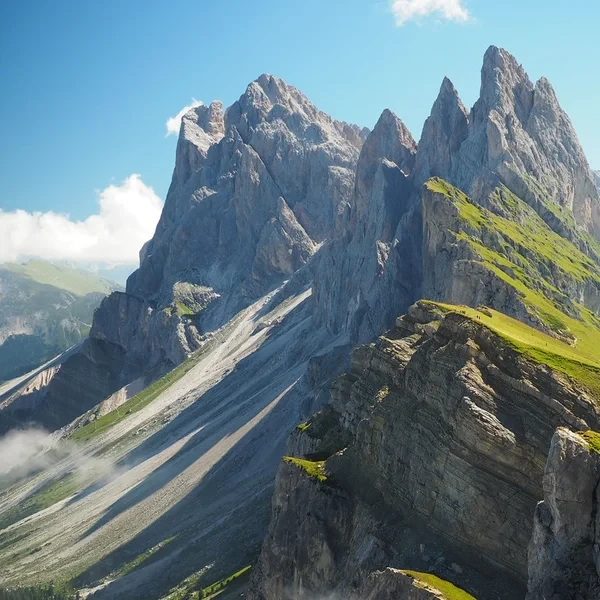
Seceda Ridgeline
Walk the most iconic ridgeline in the Dolomites, along the spine of the Odle above Val Gardena. Choose a short loop from the gondola (4 km2.5 mi) or a full-day circuit via Monte Pic da Cristauta (12.8 km8 mi), facing the Geisler spires.
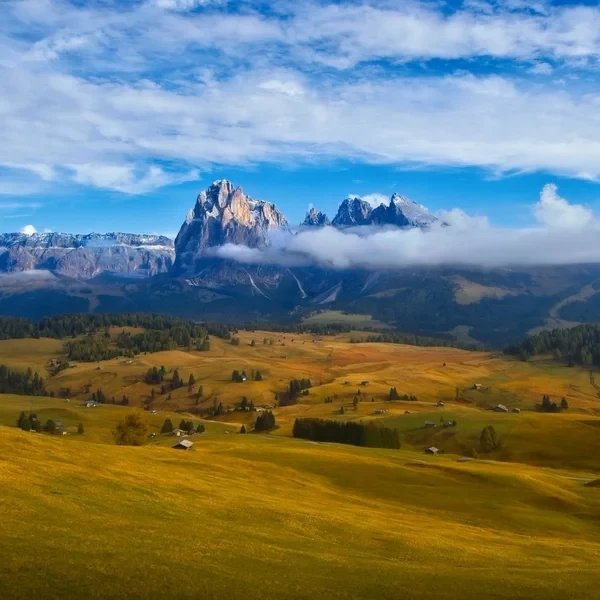
Alpe di Siusi
Experience the Alpe di Siusi (Seiser Alm), Europe's largest high-altitude alpine meadow. The Panorama Traverse offers a gentle yet spectacular circuit through emerald pastures, framed by the anvil-shaped Sciliar and the towering spires of the Sassolungo. Perfect for photographers and families alike.
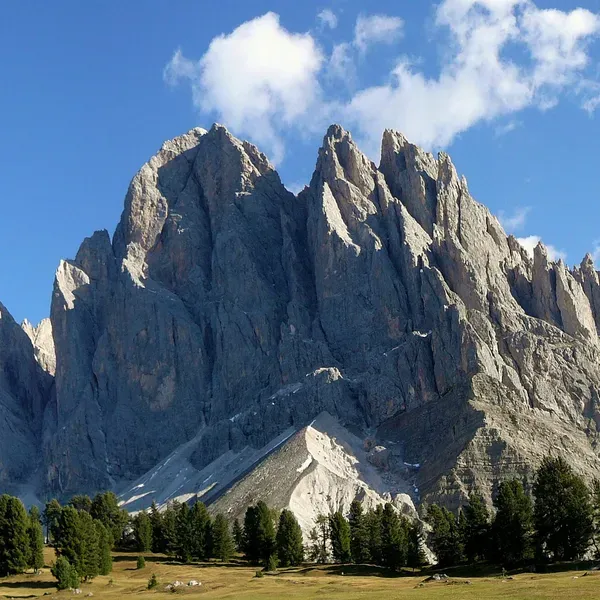
Odle and Adolf Munkel Trail - Loop from Zannes in Val di Funes
A loop from the Zannes car park, in Val di Funes, along the Adolf Munkel Trail in the Puez-Odle park: the long version, the short version, and how to park or come by bus.
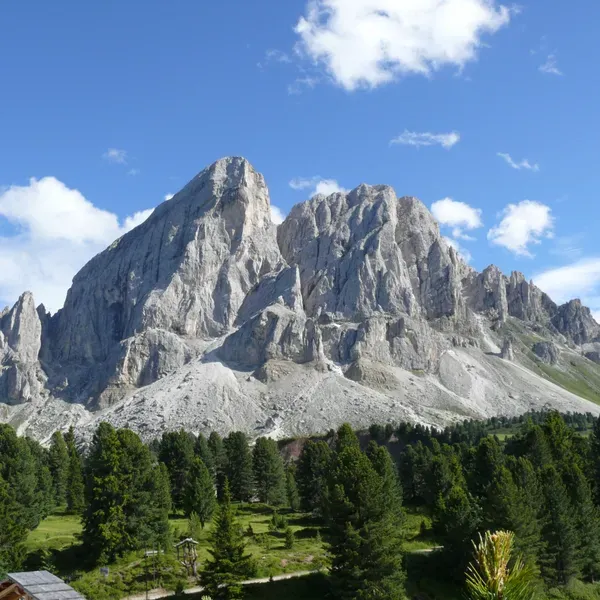
Sass de Putia Loop - Circuit via the Passo delle Erbe
The full Sass de Putia loop via the Passo delle Erbe, in the north of the Puez-Odle park: the climb to the Forcella, the huts on the east side, the short version and access by car or bus.
Huts around Ortisei
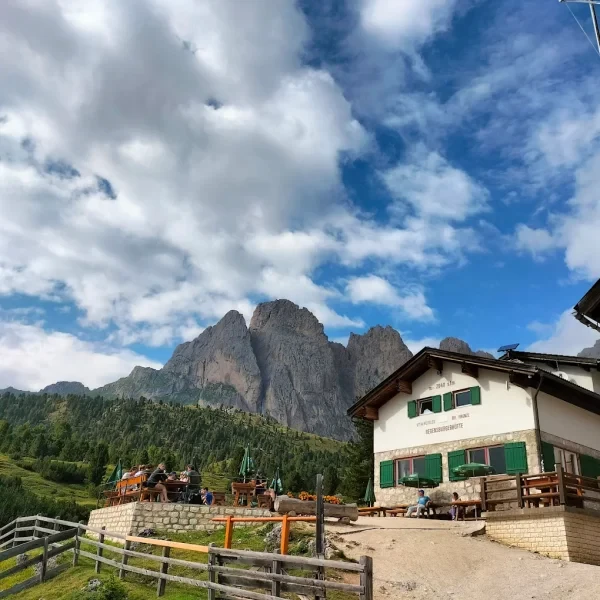
Rifugio Firenze (Regensburger Hütte)
A popular refuge on an open plateau beneath the towering Odle (Geisler) spires in the Puez-Odle Natural Park, accessible from Val Gardena.

Schlernhaus / Rifugio Bolzano
A large historic refuge atop the iconic Sciliar (Schlern) plateau, one of the most recognizable silhouettes in the Dolomites and a symbol of South Tyrol.
Passes around Ortisei
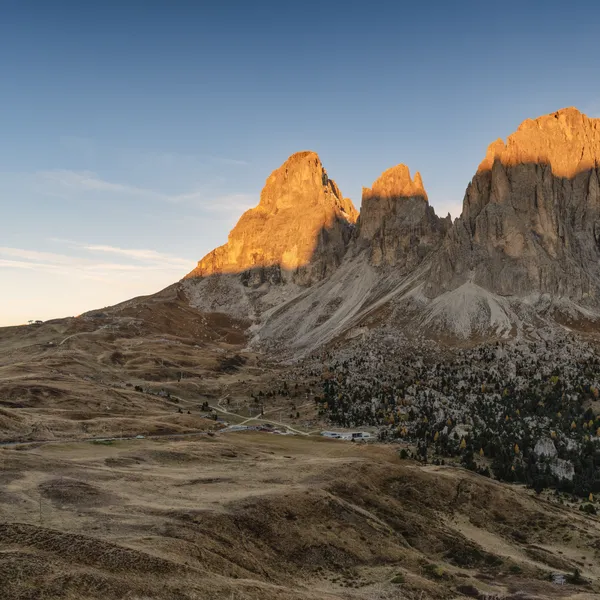
Passo Sella (Sellajoch)
Passo Sella links Val Gardena and Val di Fassa, at the foot of the Sassolungo. You can reach it by bus, on foot or by lift, and it is the start of the Sassolungo circuit and of the Forcella gondola.
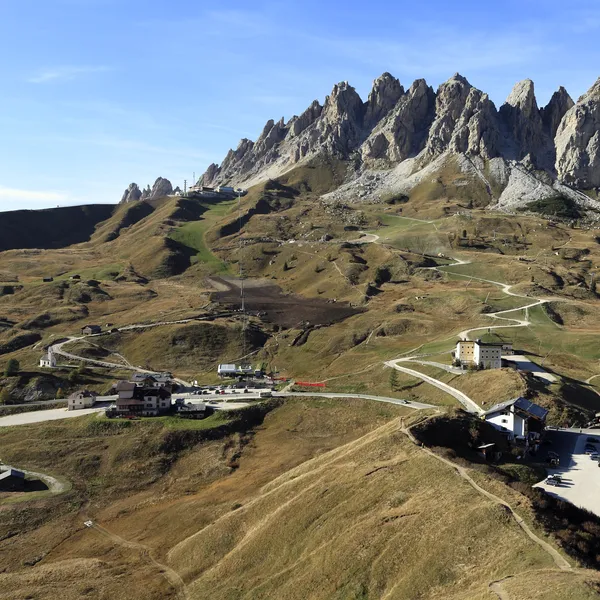
Passo Gardena (Grödner Joch)
Passo Gardena links Val Gardena and Val Badia, between the Sella and the Cirspitzen. You can reach it by bus in summer, on foot or by lift, and trail 2 leads from the pass to the Puez hut.
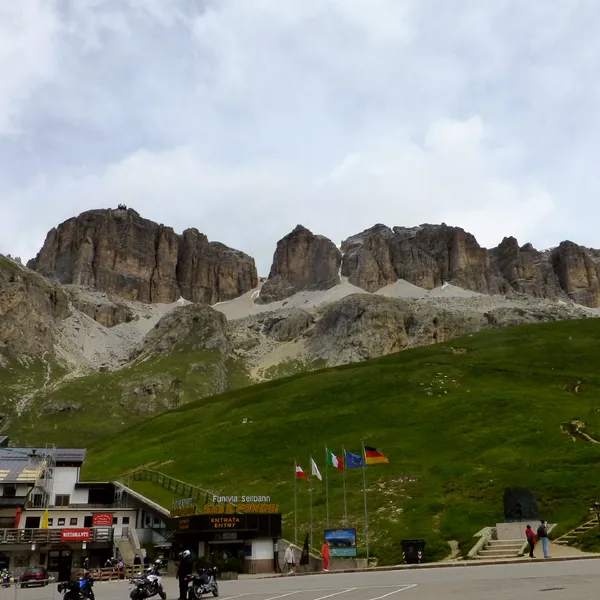
Passo Pordoi (Pordoi Pass)
Passo Pordoi links the Val di Fassa and Arabba, at the foot of the Sella. Reach it by bus or gondola, then ride the Sass Pordoi cable car, climb Piz Boè, walk the Bindelweg to the Fedaia or visit the German war cemetery.